4 Ways to Learn and Practice Treble Clef Notes
Learning the names of the treble clef notes is only the first step. To read music comfortably, students need enough practice that they can recognize notes quickly without repeatedly counting lines and spaces or working through a mnemonic. Fortunately, there are several ways to practice note reading. Music theory books, flashcards, apps and games, and written note-reading exercises can all play a role.
The right approach depends on the student, but strong practice methods generally provide plenty of repetition, present notes in different or random orders, and give students a way to see their progress over time.
Need a refresher on the notes themselves? Review the treble clef notes, including EGBDF and FACE.
1. Music Theory Books
Music theory books are where many students are first introduced to the musical staff, clefs, note names, rhythm, key signatures, and other fundamentals of written music.
Their biggest advantage is context. Rather than teaching note identification as an isolated skill, a good theory book helps students understand how notes fit into the larger language of music. The tradeoff is that a theory book has a lot to teach. Because note identification is only one topic among many, students may not get enough concentrated repetition to develop fast note recognition from a theory book alone.
Exercises may also introduce notes in an organized sequence. That’s useful while learning a concept, but students should eventually practice notes in less predictable orders so they learn to recognize the position itself rather than relying on a pattern.
Best for: Understanding music notation and building a broad foundation in music theory.
Make sure to add: Focused note-reading practice if identifying individual notes is still slow.

2. Flashcards
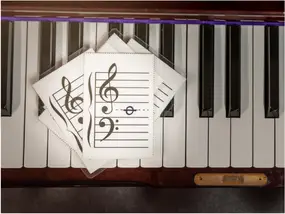
Music note flashcards are a simple way to practice identifying treble clef notes repeatedly.
Because cards can be shuffled, they naturally encourage students to recognize notes in random order rather than memorizing a sequence. Flashcards are also easy to use for short practice sessions at home, during lessons, or on the go.
Traditional flashcards do have some limitations. Unless a student, teacher, or parent keeps track of results, it can be difficult to measure whether recognition is actually getting faster over time. They also usually practice one note at a time rather than presenting notation in the larger format students will eventually encounter when reading sheet music.
Best for: Quick repetition and memorization of individual notes.
Make sure to add: Timed practice or progress tracking to measure improvement.
3. Apps & Games
Apps and music-reading games combine many of the advantages of flashcards with interactive feedback.
Students can identify randomly presented notes, receive immediate feedback, complete timed challenges, and often track accuracy or scores over multiple sessions. Games can also make repetitive practice feel less repetitive – particularly for competitive students.
Apps are especially convenient for short, frequent practice sessions when a workbook or instrument isn’t available.
The main tradeoff is that recognizing a note on a phone, tablet, or computer isn’t exactly the same experience as reading notation on printed sheet music. For that reason, digital practice works particularly well when paired with written exercises and actual music.
Best for: Interactive practice, immediate feedback, and quick practice sessions.
If you want to try this method, Note Dash by Notebusters provides free online note-reading practice with timed challenges and scoring.

4. Note-Reading Workbooks and Music Note Spellers
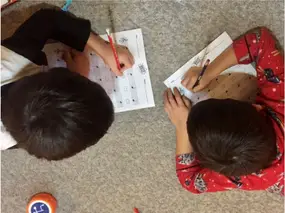
Note-reading workbooks – sometimes called music note spellers – provide focused written exercises specifically designed to reinforce music notation and note identification.
They can be particularly useful when they combine several features:
- Repetition so students encounter each note many times
- Random note presentation so students learn the note position rather than a predictable pattern
- Timed exercises that encourage recognition speed as well as accuracy
- Scoring or progress tracking so students can see improvement
- Full-size notation that more closely resembles the printed sheet music students will eventually read
Unlike a general music theory book, a dedicated note-reading workbook can devote many exercises to the same fundamental skill. That concentrated practice can help students move from consciously figuring out each note toward recognizing it more automatically.
Best for: Structured, repeatable practice that develops both accuracy and speed.
We publish Notebusters note-reading workbooks, which are specifically designed for this type of focused practice.
Which Is the Best Way to Learn Treble Clef Notes?
There isn’t one learning method that’s best for every student.
In practice, these methods can complement each other:
- Music theory books explain what the notes mean and how notation works.
- Flashcards provide simple, randomized recall practice.
- Apps and games add immediate feedback, scoring, and convenient practice away from a workbook or instrument.
- Note-reading workbooks provide structured repetition using notation that more closely resembles printed music.
For many students, the strongest approach is to combine multiple forms of practice. For example, a beginning student might first learn EGBDF and FACE, practice individual notes with flashcards or a game, use timed written exercises to develop recognition speed, and then apply those skills while reading beginner sheet music.
The goal isn’t simply to correctly identify a note eventually. It’s to recognize notes quickly enough that reading them stops interrupting the process of playing music.
Build Faster Note Recognition with Notebusters
Notebusters workbooks are designed specifically to give beginning and intermediate music students focused note-reading practice.
Instead of presenting notes in predictable patterns, Notebusters uses one-minute timed exercises, repetition, randomly presented notes, and scoring to help students build faster, more confident note recognition.
The workbooks support students learning piano, violin, guitar, bass, flute, trumpet, ukulele, and more.
Beginner editions focus on more limited note ranges for specific instruments, while the Complete Edition covers more than 30 notes across the treble, bass, and grand staves.
More than 40 million music notes have been identified by Notebusters students to date.
Explore Notebusters Workbooks →
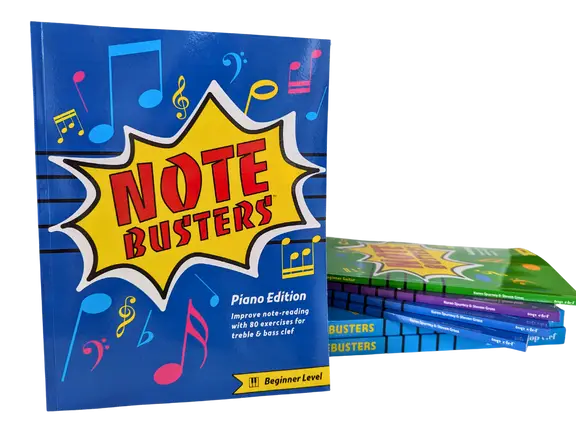
Want to Start with Free Treble Clef Practice?
Beginning students can also start with 5 free printable treble clef note-reading worksheets covering the nine notes from E4 through F5.
The exercises use one-minute timed practice and repetition, along with mnemonics and beginner tips, to help students begin developing faster note recognition.